
The arch in its landscape
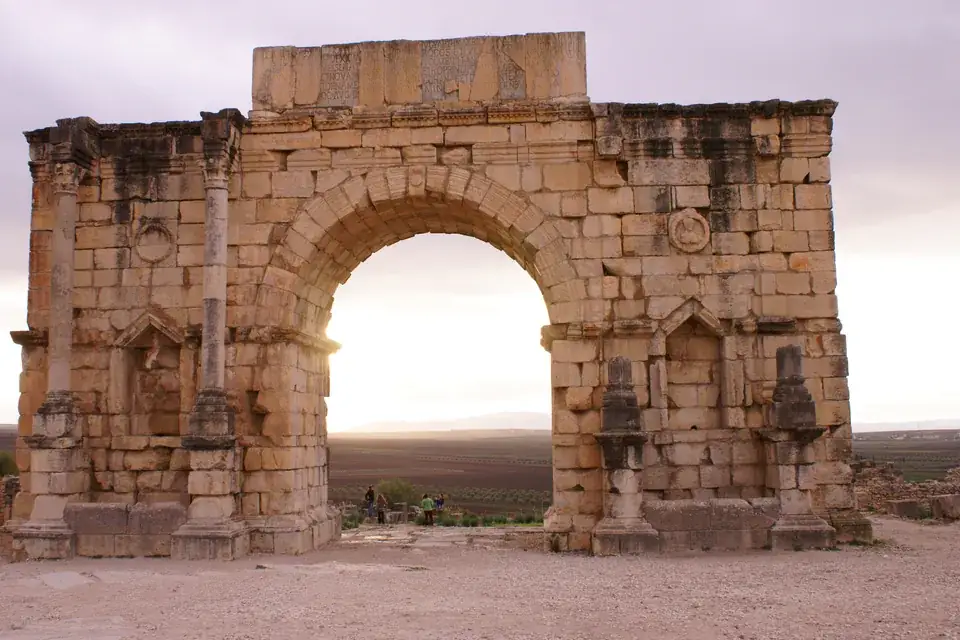
Built in 217, the arch marks the end of the main street, the decumanus maximus. From a distance it stands out against the farmland that made the town rich.
Photographs of Volubilis with context: the Arch of Caracalla, mosaics still in place and tips for taking good photos on the site.
Mosaics in Volubilis — CarlOttersen · CC BY-SA 4.0
Built in 217, the arch marks the end of the main street, the decumanus maximus. From a distance it stands out against the farmland that made the town rich.
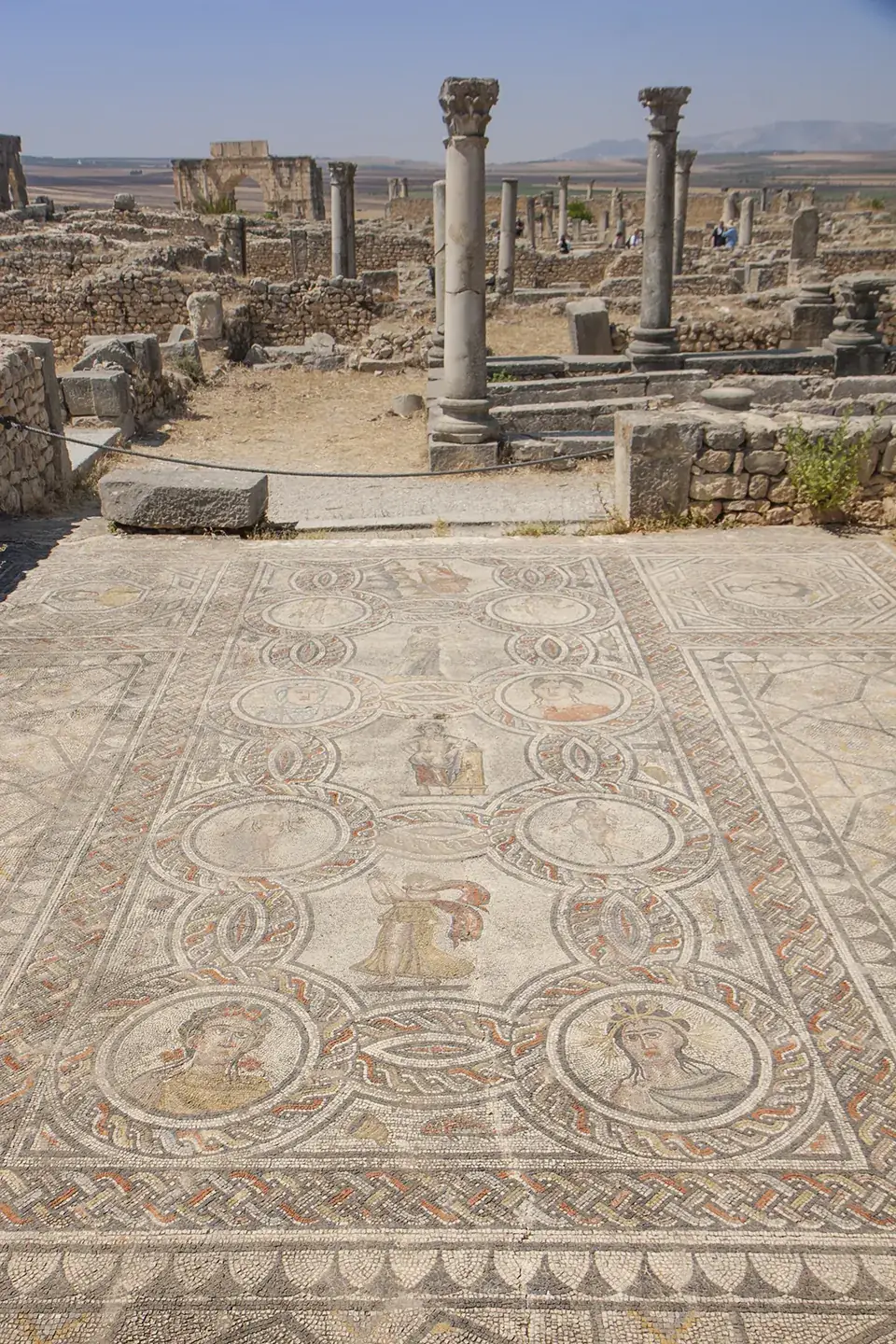
Unlike many sites, the floors of Volubilis stayed in the houses. Geometric borders frame mythological scenes made of small stone tesserae.
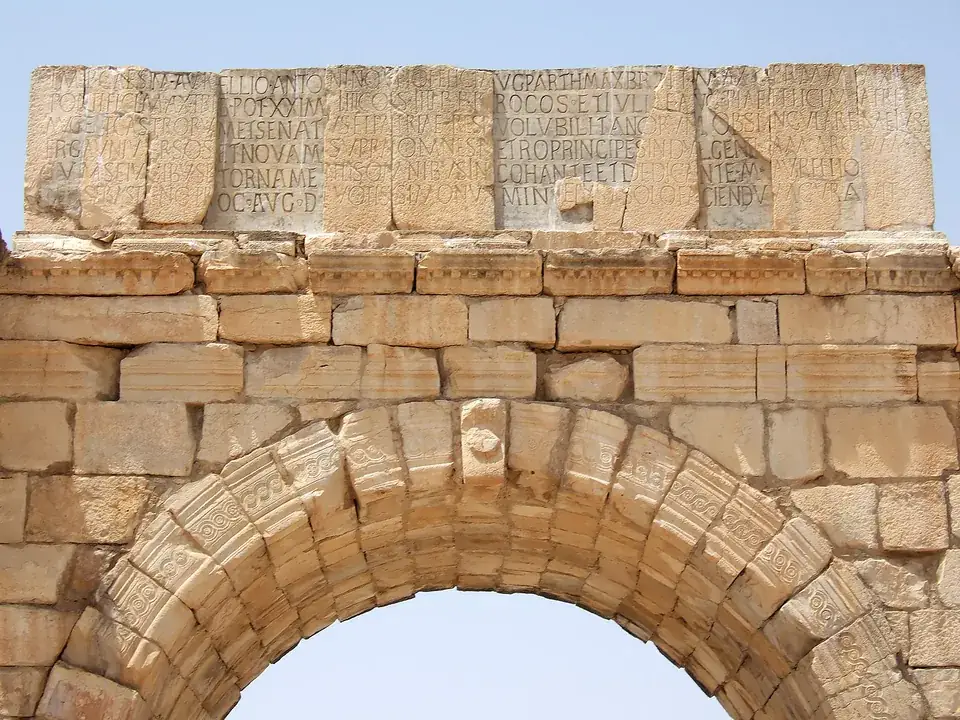
The blocks of the arch still show traces of inscriptions and of 20th-century restoration. The medallions and niches once held carved decoration.
Early morning or late afternoon gives the stone a golden tone and softer shadows. At midday the light is harsh and the heat strong.
Step back along the main street to centre the arch, or move to the side to include the plain and Jebel Zerhoun.
Stay on the paths, do not climb the walls and never step on the mosaics, even for a photo.
In Morocco, flying a drone requires authorisation. Do not bring one without valid official permission.
Follow the ancient streets and let the details tell the story.
A striking landmark that opens onto the landscape and the ancient city’s main thoroughfare.
Mythological scenes and intricate patterns reveal the artistry of the city’s ancient homes.
Around the forum, the basilica and the Capitol evoke the public life of the ancient city.